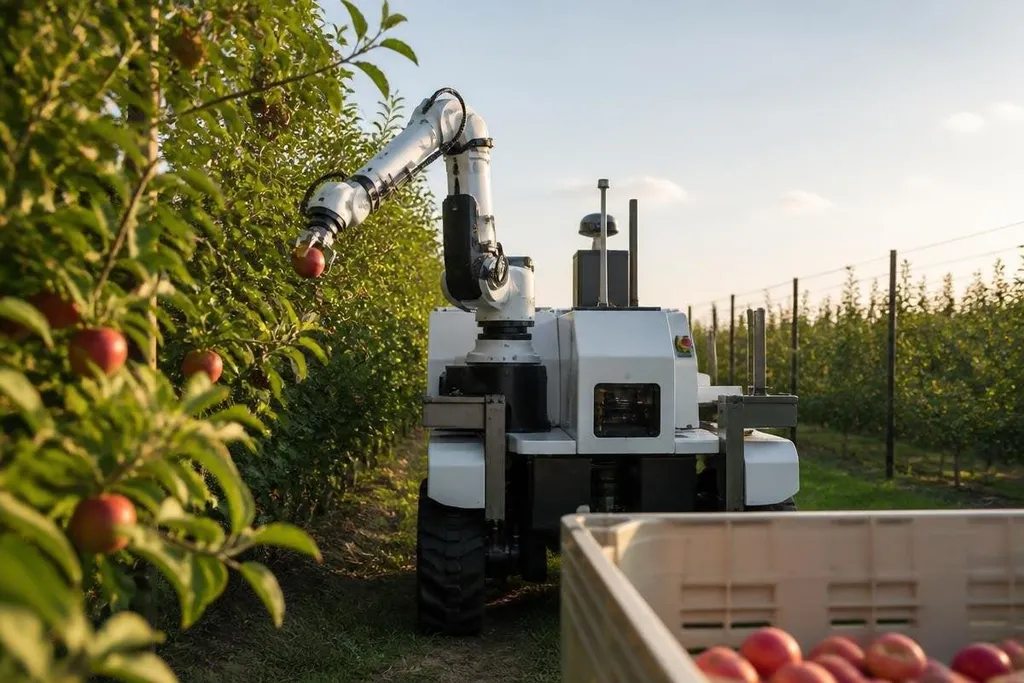
A harvesting robot has to do more than pick fruit. It must fit a crop, a work schedule, a packing line, and a farm’s cash flow. The business opportunity starts when the machine can earn money during the narrow period when a crop is ready.
For a farm owner or automation supplier, the useful question is not how human the robot looks. It’s who pays, what task gets replaced or supported, and how the machine performs when light, weather, and crop shape change.
Quick read
- The first buyers may pay for a service, not own a robot.
- Picking is only one saleable task; grading, packing, and crop records matter too.
- A robot needs a clear plan for missed fruit, repairs, charging, and seasonal demand.
Where the revenue starts
The most direct business is robot-as-a-service. A supplier owns the machines and charges a farm for completed work, operating hours, or harvested produce. That arrangement lowers the first payment for the farm and gives the supplier a reason to keep the robot running.
A second model is a seasonal rental. A farm may need extra picking capacity for a short harvest window, then have little use for the machine. Renting spreads one robot across several farms, but transport, cleaning, setup, and crop changes become part of the cost.
The machine can also earn money through work around the crop. A camera system may locate ripe produce, record missed fruit, or check plant health.
A gripper may move picked produce into crates. Those jobs can connect the robot to packing, quality checks, and farm records instead of leaving it as a single-purpose picker.
That wider job list matters because a robot that works for only one crop may sit idle for much of the year. A supplier can sell the same hardware to farms growing different crops only if the arm, gripper, software, and safety system can change without a long rebuild.
The buyer is paying for a work result
Farm owners don’t buy motors and cameras for their own sake. They pay for fruit placed in crates, fewer damaged items, or a longer picking window. Each result needs a way to check the work.
Payment rules should define what counts as a completed pick. The measure might include the number of items collected, the share left on the plant, damage during handling, or the time spent stopped by a person. Without that agreement, a low purchase price can hide a costly service bill.
This is where field data can become a second source of income. A robot that records plant position, crop condition, and picking time may give growers useful records for labor planning and crop forecasts. The farm should know who owns that data, where it is stored, and what happens if the supplier closes.
A harvesting robot needs field results before a grower can price its place in the farm’s plan. Reporting from Robot24 can put the crop, test site, date, task, and measured result beside the maker’s claim. That record leads into the costs and limits that shape the business.
The hard parts that shape the business
Harvesting is a poor fit for a fixed script. Fruit can hide behind leaves, stems can vary, and a ripe item can sit beside one that needs more time. The robot must identify the target, reach it without damaging nearby produce, and place it in a container that may already be moving.
Weather adds another cost. Dust, rain, heat, uneven ground, and changing sunlight affect sensors and movement. Repairs require a plan for spare parts, remote support, and a safe way for a person to clear a failed machine.
Labor also stays in the picture. People may need to load crates, check produce, move the robot between rows, or take over when the system cannot make a safe pick. That means the business case should count the remaining work instead of treating automation as a full replacement.
A practical buying checklist
Before signing a trial or service contract, ask for:
- Crop fit: Which crop, plant shape, and growing system did the supplier test?
- Work measure: Will payment follow hours, crates, accepted produce, or another defined result?
- Failure plan: Who removes damaged fruit, clears faults, and handles missed picks?
- Season plan: What work can the robot do when this crop is out of season?
- Data terms: Who owns camera records, crop maps, and performance reports?
- Exit terms: Can the farm stop the trial if the robot misses the agreed work rate?
I’d start with a paid service trial, not a large equipment purchase. The trial should run on the farm’s real crop and include the tasks that remain after the robot finishes picking.
The business works when the machine earns money through a defined result, stays useful beyond one harvest window, and has a repair plan that costs less than the work it replaces. That is the test suppliers still need to pass crop by crop.